
THE PERFORMANCE RHYTHM METHOD
Notice.Reset.Strengthen.Repeat.
A practical framework that helps individuals and organizations understand the internal conditions influencing behavior, communication, decision-making, resilience, and sustainable performance.
The same four-step method works across every role, industry, and level of the organization.
Works Everywhere. Works for Everyone.
Whether you're leading a team, managing a project, supporting customers, making strategic decisions, or navigating change, the same pattern repeats: moments of activation, pressure, and stress. The Performance Rhythm Method helps any person recognize what's happening—and respond with choice.
Customer Success Leaders
Engineers & Technical Leads
Sales & Account Leaders
HR & People Operations
Operations & Project Managers
Executive Teams & Founders
AWARENESS CREATES CHOICE
Notice
The first step is recognition. Before we can change anything, we need to notice what's actually happening in our body, attention, story, and behavior.


The Science Behind Notice
When the nervous system perceives threat—whether a difficult email, critical feedback, a tight deadline, or ambiguous feedback—three brain systems activate:
The Protector (ancient survival brain) mobilizes fight, flight, or freeze responses. Your body prepares for danger.
The Storyteller (emotional brain) creates narratives about what the threat means. "I'm failing." "I'm not good enough." "This will end badly."
The CEO (thinking brain) normally integrates all information and guides deliberate decisions. But under threat, the Protector and Storyteller dominate, and the CEO's access diminishes.
In Maya's case, her manager's criticism activates her Protector. Her body tenses (shallow breathing, tight jaw, rigid shoulders). Her Storyteller spins stories ("I'm losing control," "My team will lose confidence"). Her CEO can't access the perspective that this is just one moment, not a judgment of her entire capability.
The key: Maya's body is giving her information. Physical sensations, changes in breathing, tightness, restlessness—these are messages that her nervous system is predicting threat.
In Your Work: 9:15 AM — Morning Leadership Meeting
The Moment
Maya's manager critiques her team's response time on a client issue. It stings. Her shoulders rise, her breathing shallows, her mind races.
What Notice Means
Instead of pushing through or defending, Maya pauses internally. She notices: 'My body is activated. My jaw is tight. My breathing is shallow. My thoughts are looping on what this means about my leadership.' She doesn't change anything yet—she just notices.
Why It Matters
Awareness creates a choice point. Without noticing, Maya remains on autopilot, likely to either overreact defensively or shut down. With awareness, she can choose her next step.
💡 Notice your body's signals. Physical sensations are your nervous system's real-time report on how safe or threatened it perceives the situation. Awareness doesn't fix the problem—but it opens the door to choice.
SHIFT THE CURRENT STATE
Reset
Once you notice activation, the second step is to shift your current state. This is where practical tools come in: slow breathing, movement, grounding, or connection—whatever helps your nervous system predict safety again.


The Science Behind Reset
Slow breathing is one of the most powerful nervous system tools available to you. Why? Because your vagus nerve—which runs from your brain to your gut—can sense the pace of your breathing. When you breathe slowly and deeply, you're literally signaling to your nervous system: "We're safe. We can recover."
This isn't magic. It's physiology.
How it works:
- Slow breathing (especially exhaling longer than inhaling) activates the parasympathetic nervous system—your "rest and recover" system.
- Your heart rate settles. Blood flow returns to your prefrontal cortex (the thinking part). Your Storyteller quiets down.
- Within 2-3 minutes of slow breathing, your nervous system begins to predict safety again.
Other Reset tools work similarly:
- Movement (walking, stretching) helps metabolize stress hormones and signals to your body that the threat has passed.
- Grounding (feet on the floor, noticing 5 things you can see/hear/feel) brings your attention back to the present moment, away from threat narratives.
- Connection (a trusted conversation, a kind text) signals safety and belonging.
The Reset is not about "feeling positive." It's about shifting your nervous system from threat prediction back toward safety prediction.
In Your Work: 9:30 AM — 15 Minutes Later
The Moment
After the meeting, Maya's body is still activated. She could stay in this state through the morning—or she could reset.
What Reset Means
Maya steps into a quiet corner, puts her hand on her belly, and takes 5 slow, deep breaths. Exhale longer than inhale. After 3-4 minutes, she notices her shoulders drop. Her breathing settles. Her mind quiets.
Why It Matters
Without Reset, Maya would carry this activation into her next meeting, her email responses, her team conversation. Her words would come from the Protector and Storyteller—likely reactive, defensive, or withdrawn. With Reset, she shifts back toward her CEO. She can now think clearly.
Critical Note
This doesn't take 30 minutes. It takes 3-5 minutes. Real work doesn't wait. The tool needs to fit real life.
💡 Reset tools work because they change your nervous system state. Slow breathing is particularly powerful—it literally signals safety to your body. Even 3-5 minutes can shift you from activation back toward regulation.
BUILD THE CAPACITY BENEATH PERFORMANCE
Strengthen
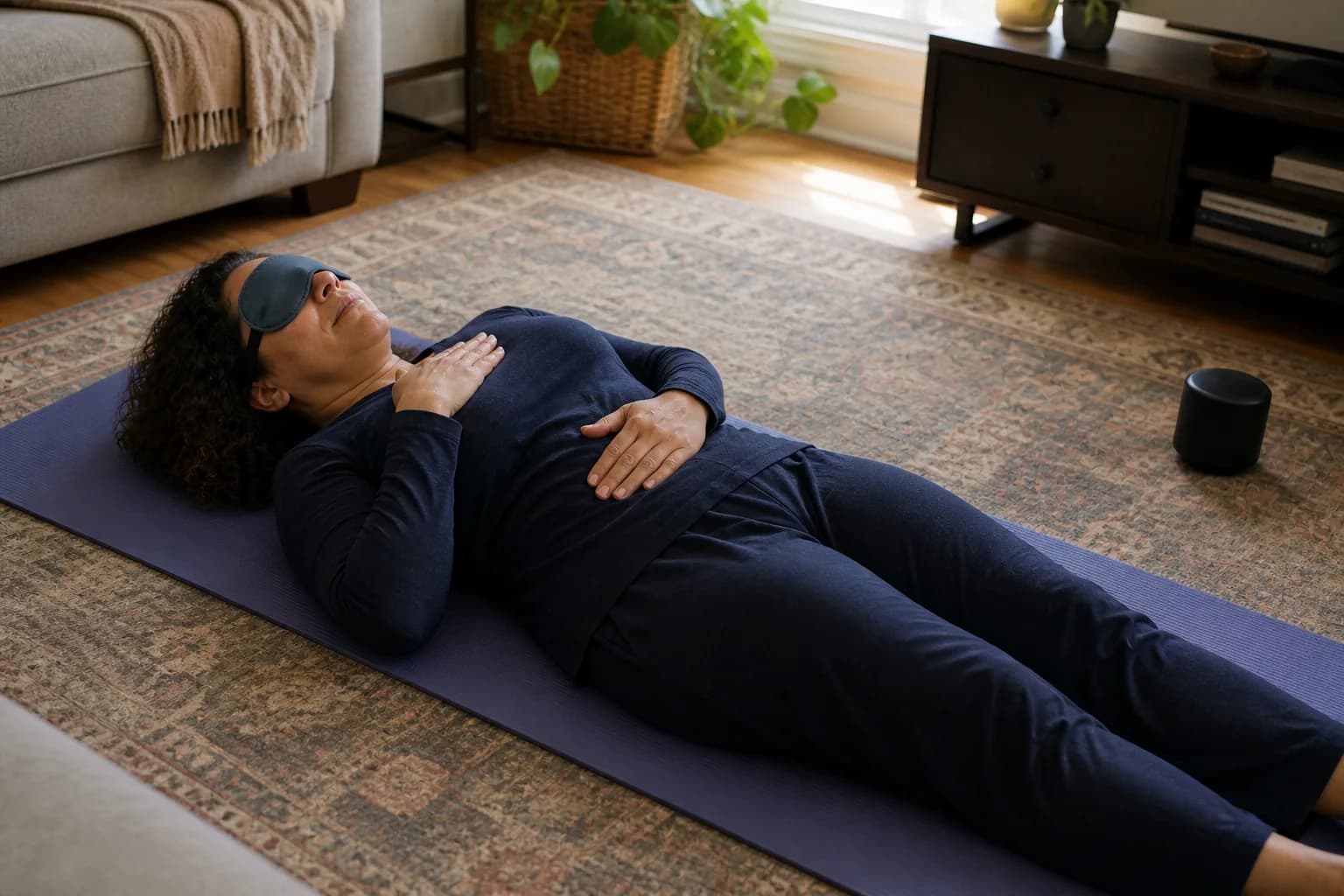
Reset handles the moment. Strengthen builds the capacity that makes those moments less frequent and less intense over time. This is where consistent practice—meditation, visualization, breathwork—becomes a skill, not a one-time experience.

The Science Behind Strengthen
One Reset moment is helpful. But lasting change comes from building capacity through repeated practice.
Here's the mechanism: Neuroplasticity. Your brain physically rewires based on repeated experience. When you practice slow breathing, meditation, or visualization consistently, you're literally training your prefrontal cortex (CEO brain) to have better access during stress. You're also dampening your threat-detection system—your amygdala—over time.
What research shows:
- 8 weeks of consistent meditation practice reduces amygdala activity (your threat-alarm system)
- Regular breathwork practice lowers your baseline stress response—you're less reactive overall
- Visualization practice strengthens the neural pathways associated with calm, clear thinking
- These changes compound. After weeks and months of practice, people report experiencing the same stressful situation but with dramatically less activation
The key difference:
- One breathwork session: helps you recover from a specific moment of stress
- Consistent breathwork practice over weeks: changes your baseline nervous system tone, making you less easily activated and more able to recover
Think of it like physical fitness. One workout helps you feel better that day. Consistent workouts over months reshape your entire physiology.
Same principle here. Consistent practice reshapes your capacity for regulation, clarity, and resilience.
In Your Work: 7:00 AM — Daily Practice (Before Work Begins)
The Moment
Maya practices for 10 minutes each morning: breathing, meditation, or visualization. She does this before email, before meetings, before the pressure begins.
What Strengthen Means
Over 4 weeks of consistent practice, Maya notices something. The same kinds of stress still happen—criticism, tight deadlines, ambiguous feedback. But her activation is less intense. Her recovery is faster. She can access her CEO more reliably. She's less reactive in meetings. Her thinking is clearer.
Why It Matters
This is the difference between managing stress in the moment (Reset) and actually changing your baseline capacity (Strengthen). Strengthen is where lasting resilience comes from.
Your Flexibility
The practice can vary: guided breathing, silent meditation, body scan, visualization. What matters is consistency—even 10 minutes daily, most days of the week.
💡 Consistent practice builds lasting capacity. Your nervous system rewires based on repeated experience. What starts as a conscious Reset tool becomes increasingly automatic—until regulation and clarity are your baseline, not your exception.
TURN INSIGHT INTO RHYTHM
Repeat
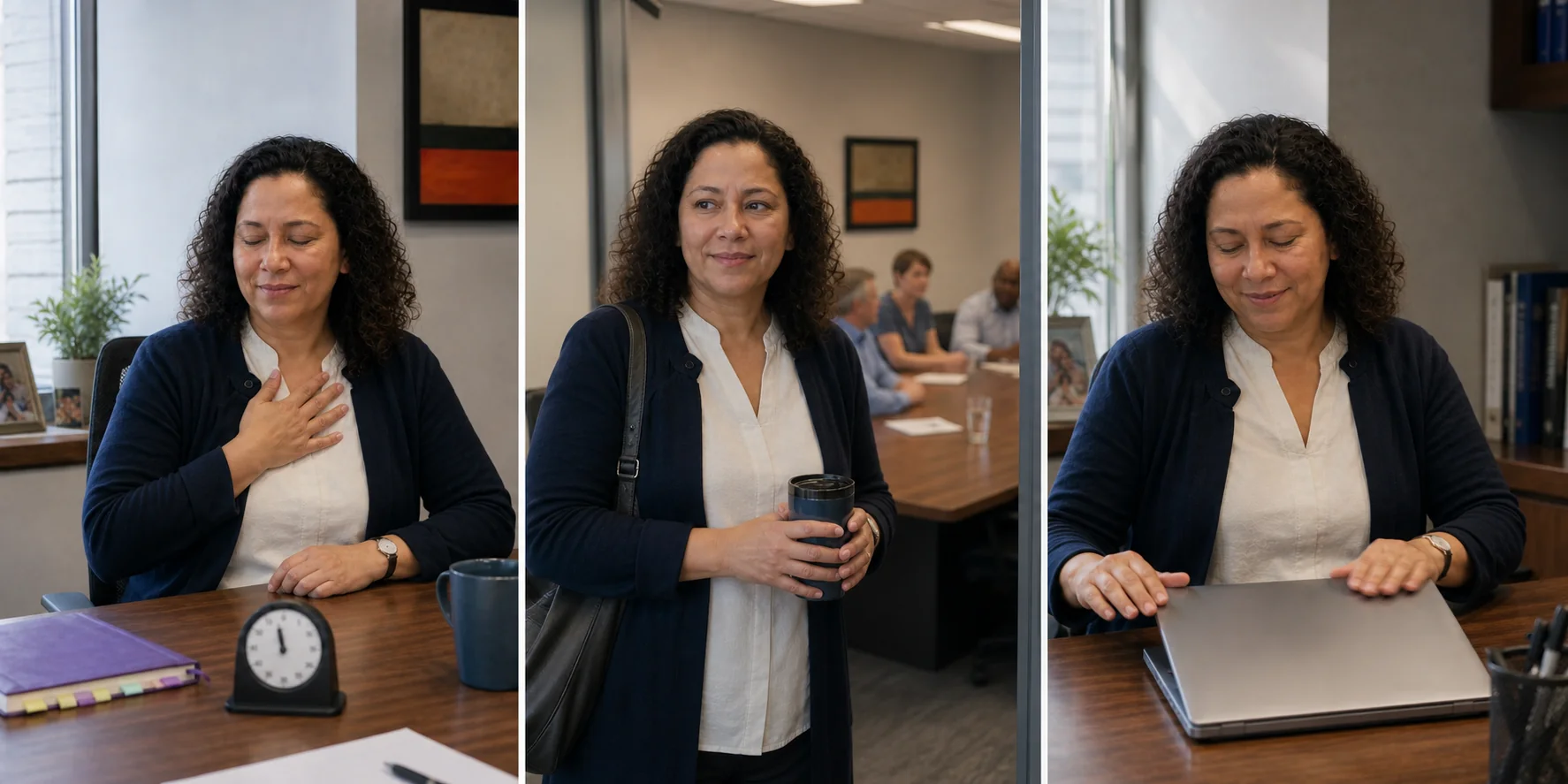
The fourth step is integration. Notice, Reset, and Strengthen don't happen once. They become a rhythm—woven into how you move through your day, week, and life.

The Science Behind Repeat
Habit formation requires repetition and consistency, not intensity. Research on behavior change shows that small, consistent practices compound faster than occasional intensive efforts.
The neural pathway principle: Each time you Notice, Reset, or practice Strengthen, you're laying down a neural pathway. The more you use that pathway, the stronger it becomes. Eventually, the response becomes increasingly automatic—you don't have to consciously think about it.
Individual benefits of Repeat:
- Reduced overall stress and activation (lower baseline nervous system tone)
- Faster recovery from difficult moments (your nervous system bounces back quicker)
- Greater emotional regulation (less reactive, more intentional)
- Clearer thinking under pressure (CEO access more reliable)
- Better sleep and recovery
Organizational benefits of Repeat:
- Teams with more regulated, present leaders communicate more effectively
- Decision-making improves (less reactive, more thoughtful)
- Psychological safety increases (people feel leaders are regulated and trustworthy)
- Retention improves (people want to work for leaders who are present and human)
- Culture shifts from reactive crisis-mode to proactive, thoughtful execution
In Your Work: Three Months Later
The Moment
Maya has been practicing consistently. Morning meditation 4-5 days a week. Reset moments as needed throughout the day. Her team has noticed.
What Repeat Means
The method isn't something Maya does. It's become how Maya moves through her day. Her morning practice is as natural as brushing her teeth. When stress shows up, she notices and resets without overthinking it. Her baseline state is calmer, clearer. She leads from her CEO more naturally.
Why It Matters
This is where real, lasting change lives. Not in the intensity of one experience, but in the consistency of small practices woven into real life. Performance Rhythm transforms from a workshop to a way of operating.
The Ripple
And because Maya is regulated, her team feels it. Her presence is different. Her communication is clearer. Her decision-making is sharper. The capacity she built for herself ripples outward.
💡 The method works because it's woven into real life—not separate from it. Small, consistent practices compound into lasting change. What begins as conscious effort becomes increasingly automatic, until regulation and clarity are simply how you operate.
The Outcome: Same Person, Different Access
The goal of the Performance Rhythm Method is not to eliminate stress. Pressure and challenge are part of meaningful work. The goal is to change your relationship to stress—to notice it, work with it, and return to clarity and choice.
Individual
- ✓Greater awareness of your own nervous system and stress signals
- ✓Faster recovery from difficult moments
- ✓Clearer thinking under pressure
- ✓More emotional regulation (less reactive, more intentional)
- ✓Better focus, energy, and sleep
- ✓Stronger sense of choice and agency
Team & Leadership
- ✓More present, regulated leadership
- ✓Clearer communication and decision-making
- ✓Greater psychological safety
- ✓Stronger resilience across the team
- ✓Better collaboration and trust
- ✓Reduced reactive crisis-mode
Organizational
- ✓Lower turnover (people want to stay)
- ✓Better retention of top talent
- ✓Improved execution and consistency
- ✓Stronger culture and psychological safety
- ✓Sustainable performance (not burnout-driven)
- ✓Leaders and teams that thrive—not just survive
Scientific Foundation, Not Spiritual Overlay
The Performance Rhythm Method is grounded in neuroscience, physiology, psychology, and human performance research. We use accessible teaching frameworks—like the Protector, Storyteller, and CEO—but they're rooted in actual brain science.
Polyvagal Theory
Your vagus nerve detects whether your body is safe or threatened and coordinates your nervous system response. Slow breathing and grounding activate this system.
Porges, Polyvagal Theory
Threat Detection & the Amygdala
Under stress, your threat-detection system (amygdala) activates and dominates decision-making. Regulation practices reduce amygdala reactivity over time.
LeDoux, Emotional Brain; Siegel, Mindsight
Neuroplasticity
Your brain physically rewires based on repeated experience. Consistent practice builds new neural pathways and strengthens your capacity for regulation.
Doidge, The Brain That Changes Itself
Stress Physiology & Recovery
Chronic activation of stress hormones (cortisol, adrenaline) impairs cognition and health. Recovery practices help restore balance.
McEwen, Allostatic Load; Sapolsky, Why Zebras Don't Get Ulcers
Performance Rhythm combines these insights with practical tools that fit real work. Not spirituality. Not wishful thinking. Physiology and practice.
Ready to Bring This to Your Team?
See how the Performance Rhythm Method can strengthen your people, build resilience, and create sustainable performance.
30 minutes. We'll discuss your organization's challenges and explore whether this approach is a fit.